Beginner’s Guide to Wheel Throwing in Sussex: What to Expect in Your First Pottery Class
Trying wheel throwing for the first time is exciting, a bit messy, and surprisingly calming. Across Sussex — from Brighton and Hove to Chichester and Selsey — studios offer beginner‑friendly classes designed to help you
Trying wheel throwing for the first time is exciting, a bit messy, and surprisingly calming. Across Sussex — from Brighton and Hove to Chichester and Selsey — studios offer beginner‑friendly classes designed to help you slow down, learn something new, and enjoy the simple pleasure of making a pot on the wheel.
If you’ve been thinking about giving it a try, here’s a gentle guide to what really happens in your first session.
A Warm Welcome (and No Experience Needed)
Most Sussex studios run dedicated beginner courses — often 4, 6, or 8 weeks long — or one‑off taster sessions. These classes are built for complete beginners, so you won’t be expected to know anything about clay, tools, or technique. Tutors guide you step‑by‑step, demonstrating each stage and helping you whenever you need it.
You’ll usually start with a short introduction to the studio, the equipment, and the clay you’ll be using. It’s relaxed, friendly, and designed to help you settle in.
Getting Hands-On: Preparing and Centring Clay
Your first practical task is preparing your clay. This might involve:
Wedging — a simple kneading technique that removes air bubbles
Learning the feel of the clay — soft, cool, and surprisingly grounding
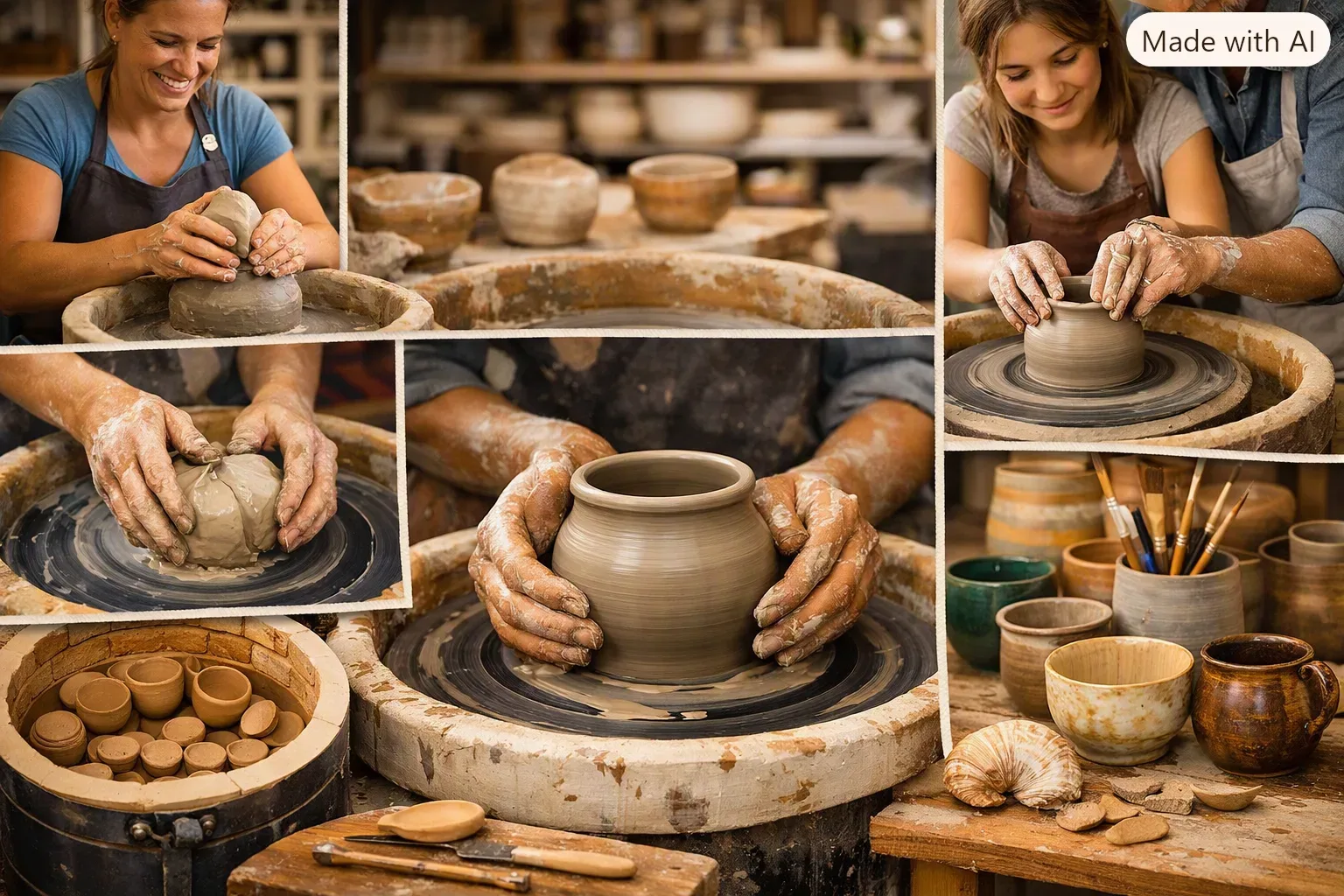
Then comes the part everyone talks about: centring. This is where you use the wheel’s movement and your hands to steady the clay into a perfectly balanced mound. It’s the foundation of wheel throwing, and your tutor will guide your hands and posture so you can feel how the clay responds.
Most beginners find centring tricky at first — but also strangely meditative.
Forming Your First Shape
Once the clay is centred, you’ll learn how to open it up and pull the walls into a simple form. In a first class, this is usually:
a small cylinder,
a bowl, or
a simple cup.
Studios like The Mud House in Brighton and Pottery Gagliano in Hove focus on these beginner shapes because they teach the essential movements: steady pressure, gentle lifting, and working with the wheel rather than against it.
Your pot may wobble, lean, or collapse — and that’s completely normal. Every beginner’s pot has personality.
A Calm, Supportive Atmosphere
Wheel throwing is surprisingly soothing. The steady hum of the wheel, the feel of clay, and the focus on your hands create a quiet, mindful space. Most classes are small, so tutors can offer individual guidance and encouragement.
Studios across Sussex emphasise this gentle, confidence‑building approach. Chisel Pottery in Chichester, for example, centres its beginner experiences around slowing down, connecting with others, and enjoying the process of making something by hand.
What Happens After You Throw Your Pot
At the end of your first session, your pot will be carefully labelled and set aside to dry. You won’t usually trim or glaze it on day one — those steps come later in multi‑week courses.
In longer beginner courses (6–8 weeks), you’ll learn:
Trimming — refining the shape once the clay firms up
Surface decoration — using slips, textures, or simple patterns
Glazing — adding colour and finish
Firing — the final transformation from clay to ceramic
Studios like Pottery Gagliano offer structured beginner programmes that take you through the full process from raw clay to finished piece.
What You Should Bring
Most Sussex studios provide everything you need. You’ll only need:
clothes you don’t mind getting a bit muddy
short nails (long nails make wheel work harder)
a hair tie if needed
a bottle of water
an open, curious mindset
Pottery is wonderfully tactile, so expect your hands to get messy — it’s part of the fun.
Why Wheel Throwing Is Worth Trying
Beginners often describe their first wheel‑throwing class as:
calming
grounding
surprisingly absorbing
confidence‑boosting
a welcome break from screens and busy days
There’s something deeply satisfying about shaping clay with your hands. Even if your first pot is wonky, you’ll feel proud of it — because you made it.
And Sussex has a thriving pottery community, with friendly tutors, welcoming studios, and courses designed to help you grow gently at your own pace.
A Small Step Into a Creative Community
Your first wheel‑throwing class is just the beginning. Whether you continue with a 4‑week foundation course, join a longer 8‑week programme, or simply enjoy a one‑off taster, you’ll be stepping into a warm, creative community that celebrates beginners.
Sussex is full of places where you can learn, relax, and discover the joy of making something with your hands. Your first pot might be simple — but it’s the start of something special.