Why You Don't Need Artistic Talent to Enjoy Art
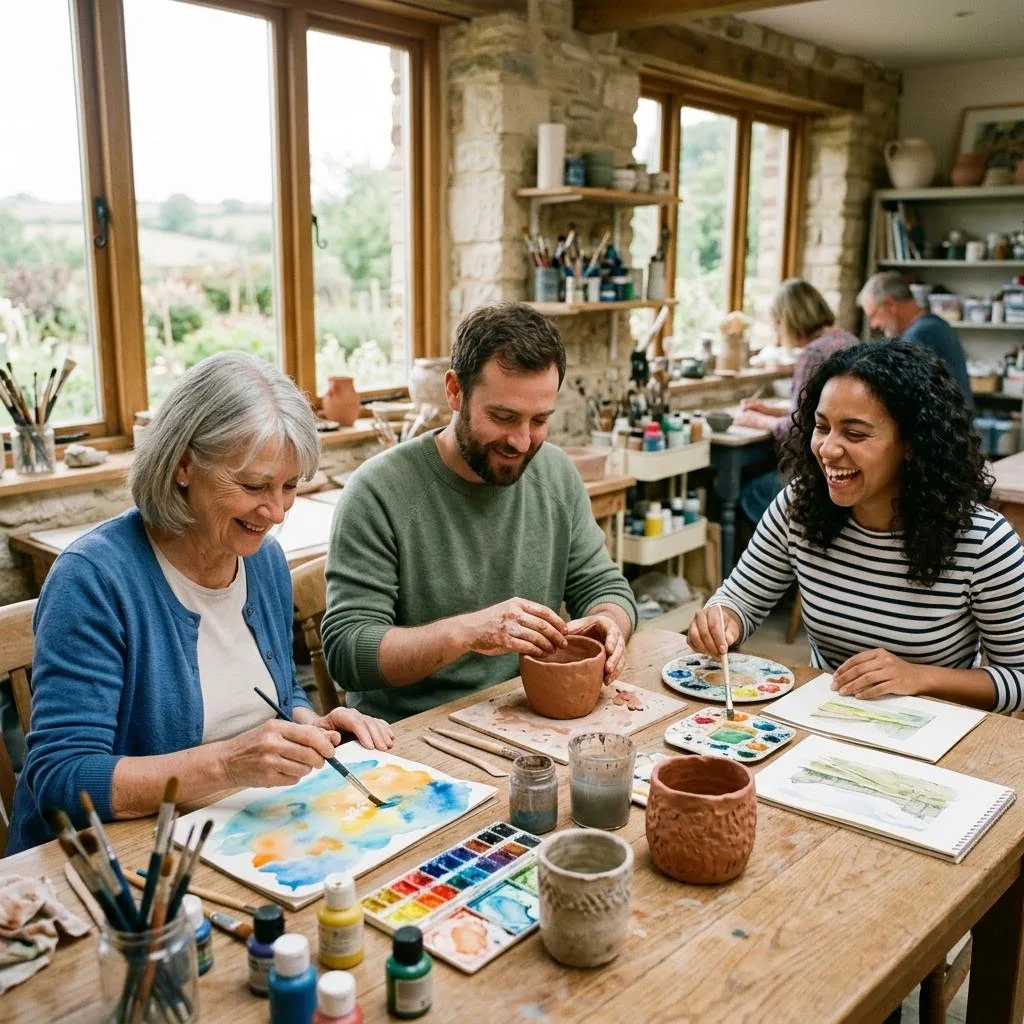
You don't need artistic talent to enjoy art. Discover how creativity, community and a willingness to try can bring confidence, calm and joy to everyday life.
Walk into almost any art class, pottery workshop, or creative group and you'll hear the same sentence sooner or later:
"I'm not artistic."
It's one of the most common reasons people give for avoiding creativity. Many adults carry a belief that art belongs to talented people, while everyone else should simply admire it from a distance. Somewhere along the way, they decided that because they couldn't draw perfectly, paint realistically, or create a masterpiece, art wasn't for them.
The truth is very different.
Art isn't reserved for a gifted few. Creativity is a natural human trait, not a special talent granted to a select group. Whether you're picking up a paintbrush, shaping clay, sketching a landscape, experimenting with textiles, or simply doodling on a piece of paper, the benefits of creativity are available to everyone.
You don't need artistic talent to enjoy art. You only need curiosity, a willingness to try, and permission to let go of the idea that everything you create has to be good.
The Myth of Natural Talent
Many people assume that artists are born with an ability that others simply don't possess. While some individuals may develop skills more quickly than others, most artistic ability comes from practice, experimentation, and persistence.
Think about learning to ride a bicycle. Nobody expects to jump on a bike for the first time and cycle perfectly. We accept that there will be wobbles, mistakes, and falls along the way. Yet when it comes to art, many adults expect immediate results.
If the first drawing doesn't look right, they conclude they have no talent.
But creativity doesn't work like that.
Every accomplished artist started as a beginner. Every painter once struggled to hold a brush properly. Every ceramicist made misshapen pots. Every sketchbook contains pages that never quite worked.
The difference isn't talent.
The difference is often simply that they kept going.
Art Is About the Process, Not the Outcome
One of the greatest gifts of making art is that it encourages us to focus on the process rather than the result.
Modern life is filled with goals, targets, deadlines, and performance measures. We are constantly asked to improve, achieve, and produce results. Creativity offers something different.
When you're painting, drawing, or working with clay, you can become fully absorbed in the experience itself. Colours blend. Shapes emerge. Materials respond to your touch. Time slows down.
In those moments, it doesn't matter whether the final piece is exhibition-worthy.
What matters is the experience of creating.
Many people discover that their most enjoyable creative sessions are not the ones that produce their best work. They're the sessions where they stop worrying about getting things right and simply enjoy exploring.
Creativity Supports Mental Wellbeing
Research and personal experience alike suggest that creative activities can have a profoundly positive effect on wellbeing.
Art provides a chance to step away from daily pressures and focus on something tangible and rewarding. It gives the mind a break from constant thinking and helps redirect attention into the present moment.
This is one reason many people describe creative activities as calming or therapeutic.
When you're concentrating on mixing paints, carving clay, or arranging a design, your attention naturally shifts away from worries and distractions. You become immersed in the task at hand.
Unlike many activities that involve screens, notifications, and endless information, creativity often encourages slower, more mindful engagement.
You don't need talent to experience these benefits.
The brain doesn't ask whether your painting is good enough before allowing you to enjoy the calming effects of creating.
Mistakes Are Part of Creativity
Many adults avoid art because they fear making mistakes.
Yet creativity thrives on mistakes.
Some of the most interesting artistic discoveries happen when things don't go according to plan. A colour mixes unexpectedly. A brushstroke goes in the wrong direction. A pottery piece develops a unique texture.
In creative spaces, mistakes are often transformed into opportunities.
Learning to embrace imperfection through art can also influence other areas of life. You begin to see that not everything has to be flawless to be worthwhile. You become more comfortable experimenting, taking risks, and trying new things.
This shift in mindset can build confidence far beyond the art room.
Creative Communities Matter
While creating alone can be rewarding, many people discover that workshops and creative groups offer something even more valuable: connection.
Art has an incredible ability to bring people together.
In a workshop, individuals from different backgrounds share ideas, encourage each other, and celebrate progress together. Conversations develop naturally while hands are busy creating.
Unlike some social situations, creative environments remove much of the pressure. People focus on the activity rather than on making small talk. Friendships often form organically through shared experiences.
For many participants, the social aspect becomes just as important as the art itself.
A pottery class, painting group, or craft workshop isn't simply a place to learn skills. It's a place to belong.
Creativity Doesn't Have an Age Limit
Another common misconception is that art is something children do.
Yet many people discover creativity later in life and find it becomes one of their most fulfilling interests.
Some start after retirement. Others begin when children leave home. Many pick up a creative hobby after years spent focused on careers, family responsibilities, or other commitments.
The wonderful thing about art is that there is no deadline for starting.
You don't need years of previous experience.
You don't need formal training.
You don't need to call yourself an artist.
You simply need to begin.
Every workshop is full of people who once believed they couldn't create anything worthwhile.
Many are surprised by what they achieve when given the chance.
Redefining Success
Perhaps the biggest barrier to enjoying art is the belief that success means creating something impressive.
What if success meant something else?
What if success meant spending two hours feeling relaxed?
What if it meant meeting new people?
What if it meant trying something you've never done before?
What if it meant laughing at your mistakes and learning from them?
When we redefine success in these terms, creativity becomes accessible to everyone.
Art doesn't have to be perfect.
It doesn't have to be realistic.
It doesn't have to be displayed on a gallery wall.
Its value lies in what it gives you during the act of creating.
Give Yourself Permission to Create
The next time you find yourself saying, "I'm not artistic," consider replacing that thought with a different question:
"What if artistic talent isn't the point?"
Art can reduce stress, build confidence, encourage mindfulness, foster friendships, and bring joy into everyday life. None of those benefits require exceptional skill.
They simply require participation.
So pick up a pencil. Try a pottery class. Join a local workshop. Experiment with paint. Make something imperfect.
Because art isn't just for artists.
It's for anyone willing to create.
And sometimes the people who believe they're the least artistic are the ones who discover the greatest joy when they finally give themselves permission to begin.